Selection of extreme pressure agents
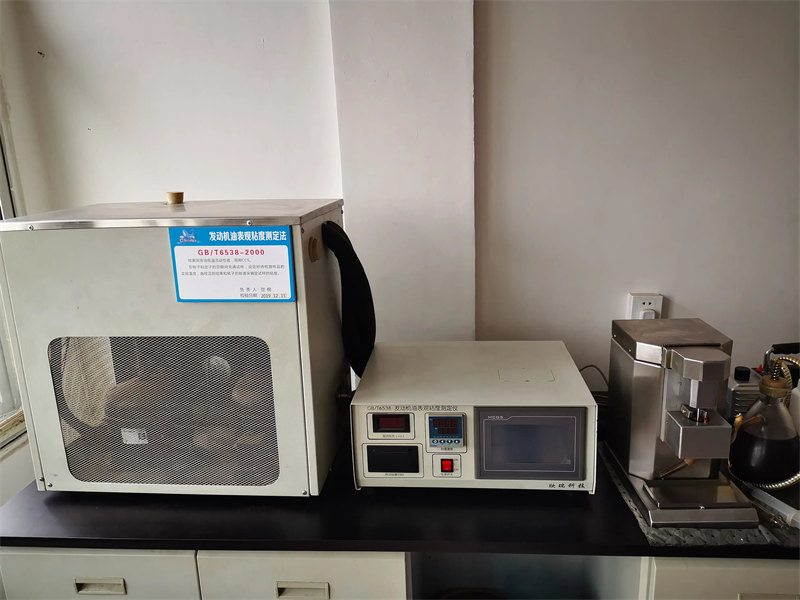
The cold rolling process of stainless steel is demanding. The deformation heat and high rolling force generated during the rolling process require stainless steel rolling oil to have good extreme pressure properties. Since oiliness agents are only suitable for environments below 150 ℃, the applicable temperature range of phosphorus-containing extreme pressure agents is 150-250 ℃, and the applicable temperature range of sulfur-containing extreme pressure agents is about 300-800 ℃. In order to meet the customer's requirements for the amount of reduction under various rolling procedures and ensure that stainless steel rolling oil has good lubrication properties in all temperature ranges, a variety of sulfurized fats and phosphate ester extreme pressure agents were screened.
Sulfur-containing extreme pressure agents A (inactive sulfur), B (active sulfur) and C (active sulfur) in different proportions were added to the basic formula composed of base oil and oiliness agents alone or in a certain proportion to prepare a small sample.
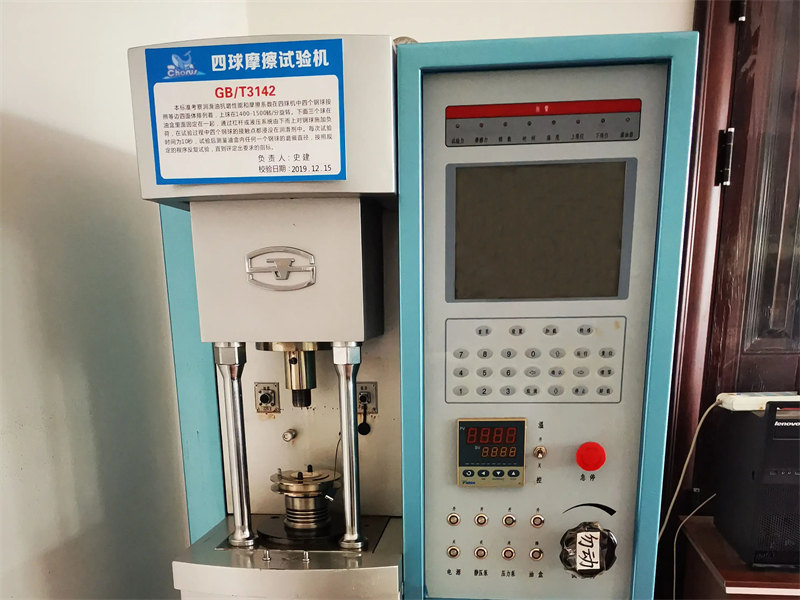
When a single sulfur-containing extreme pressure agent is added, the anti-wear performance of the sample is not ideal; while the compounding of two sulfur-containing extreme pressure agents can significantly improve the extreme pressure and anti-wear properties of the oil.
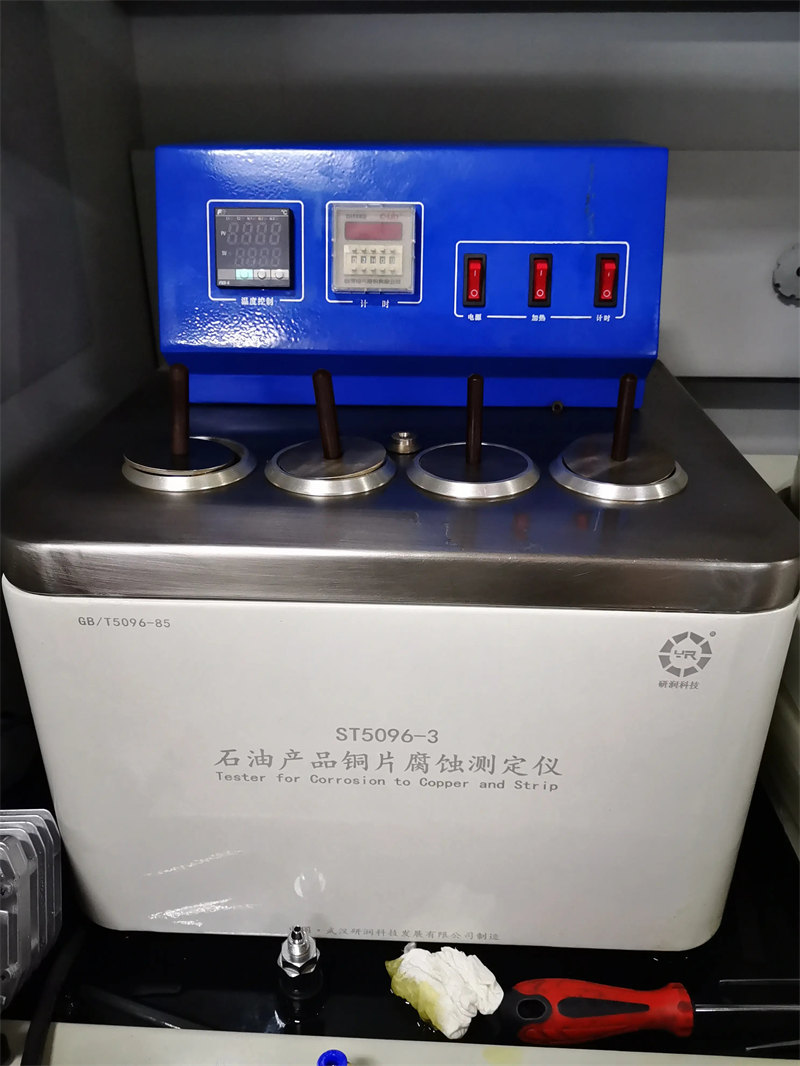
After comprehensive consideration, the sample with the best extreme pressure and anti-wear performance and good copper corrosion results was selected, that is, sulfur-containing extreme pressure agents B and C were compounded.
In order to improve the anti-wear and friction reduction performance of stainless steel rolling oil, sulfur-containing extreme pressure agents B and C and phosphorus-containing extreme pressure agents D and E were added to the basic formula composed of base oil and oiliness agent for compounding.
Finally, sulfur-containing extreme pressure agent B, sulfur-containing extreme pressure agent C and phosphorus-containing extreme pressure agent E were selected as the extreme pressure and anti-wear additives for the developed formula.
Emulsifier selection
The emulsification state and particle size distribution of the emulsion directly affect the lubricity of the emulsion. Research has found that the worse the stability of the emulsion, the larger the particle size, the better its water-free spreadability and the better the lubricity of the emulsion; however, the instability of the emulsion will bring some problems to the emulsion circulation system, such as thick floating oil and floating soap on the surface of the emulsion tank. If the stirring is uneven, it will affect the uniformity of the emulsion sprayed on the surface of the stainless steel strip; and the emulsion particle size is too large, it is easy to adhere to the plate surface and difficult to blow, resulting in too much residual oil on the plate surface, which will affect the annealing cleanliness of the oil. Therefore, on the basis of ensuring lubrication performance, the emulsion should be kept as stable as possible.
The type and dosage of emulsifier will affect the stability of the emulsion and the size of the particles in the emulsion. By controlling the total dosage of the emulsifier and the ratio between different emulsifiers, the stability of the emulsion, that is, the dispersion state of the oil and the oil-water separation speed, can be adjusted. This is the technical core of the stainless steel rolling oil emulsification dispersion system.
ESI is the emulsion stability index. By testing the ESI value, the stability of the emulsion can be judged. The larger the ESI value, the better the uniformity of the emulsion; conversely, the smaller the ESI, the worse the uniformity of the emulsion.
Since the optimal hydrophilic-lipophilic balance (HLB value) required for each oil to be emulsified is different, the emulsification system corresponding to the optimal emulsification state is also different for different formulation systems. For the basic formulation system with an oiliness agent dosage of 50% (mass fraction), a variety of non-ionic emulsifiers were screened in the laboratory.
China Lubricant Network is committed to good article classification